
An effects unit you can build.
- For guitar, bass and vocals
- Optimised Neural Amp Models (NAM) and IRs
- Open source code and designs
Features
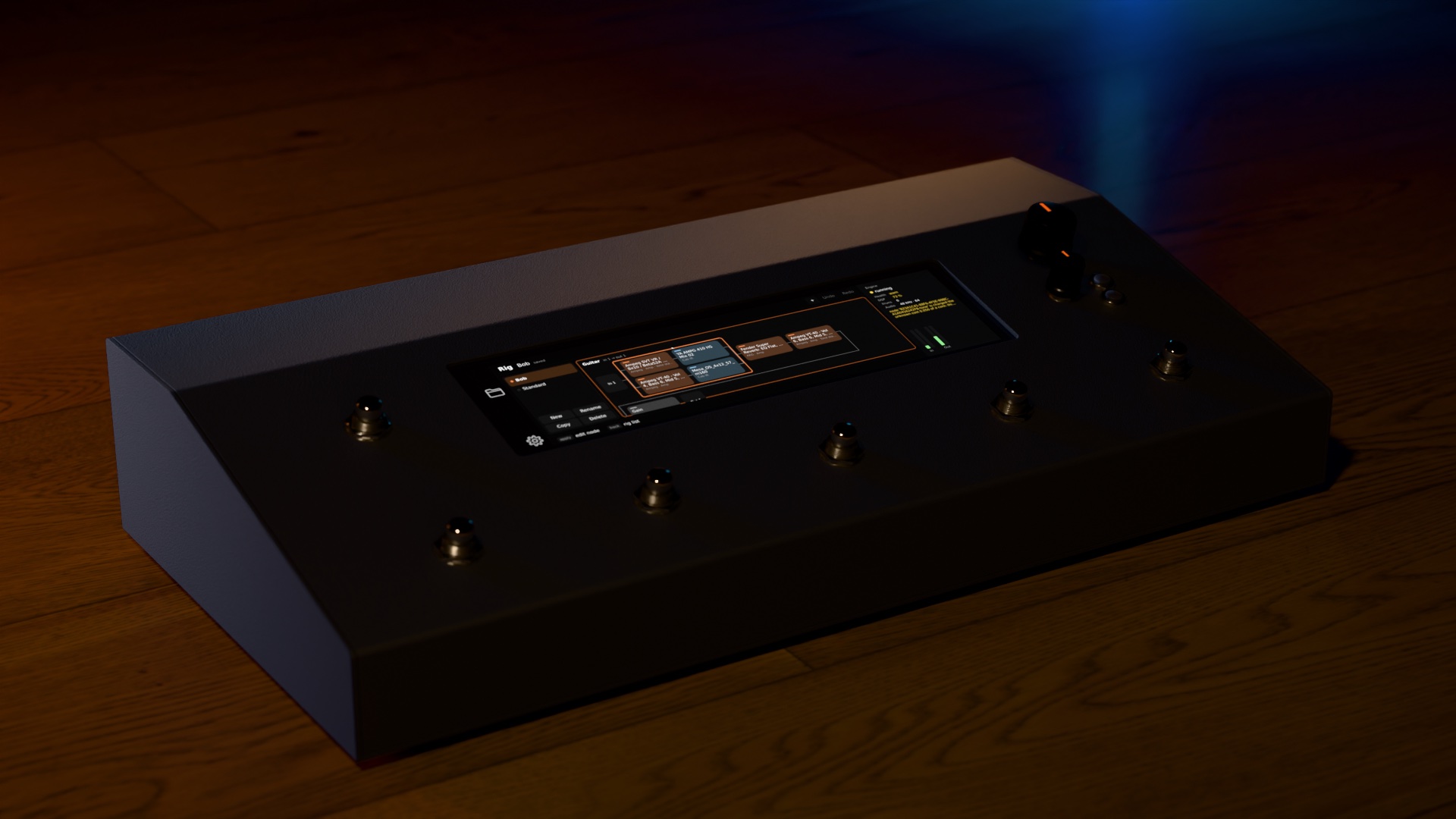
- 8 NAM A2 Full simultaneously on a Pi 5
- Extremely low latency switching, no glitches
- Open designs, standard parts
Hardware
| Component | Description | Example | Price |
|---|---|---|---|
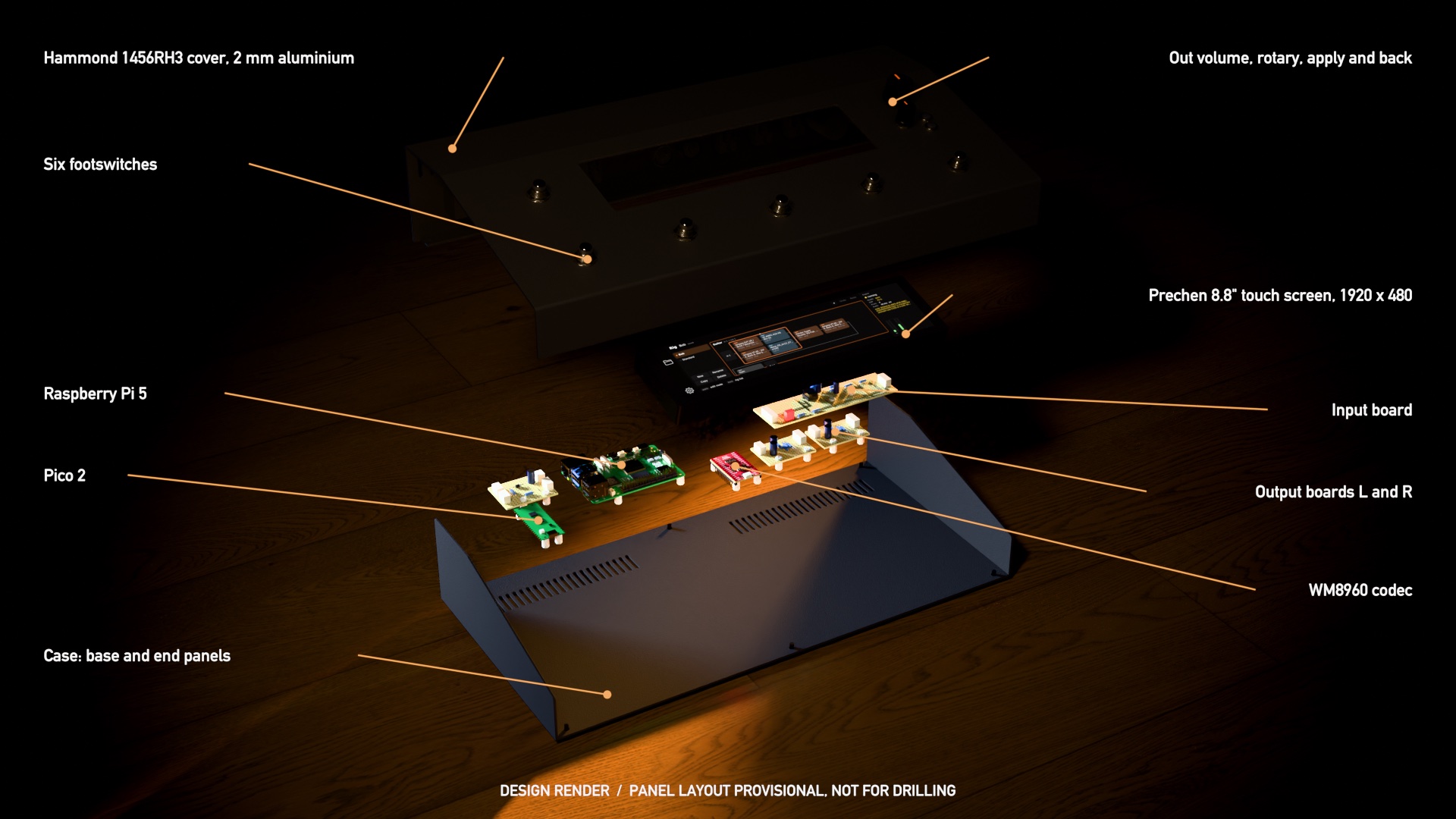
| Core | The processing unit. Its job is to handle the effects. It doesn’t need much RAM, but it does need a little processing power. | Raspberry Pi 5 with 1GB RAM | £40 |
| Codec | The bridge between digital and analogue audio. It needs to support at least one input and one output, 24bit 48kHz. | A WM8960-based breakout board | £5 |
| Analogue input and output | Sockets, wires, basic circuits | Various small parts | £40 |
| Control | The interface with hardware controls, plus some buttons, dials, switches. | Raspberry Pi Pico and your choice of controls | £10 |
| Screenoptional | Touchscreen for direct control (or you can use the app), or something more basic if you don’t want to edit on the pedal itself. | 8.8″ wide touchscreen | £55 |
| 2.4″ LCD | £8 | ||
| Case | Lots of options. The components aren’t huge, but letting Core breathe is a good idea. | Hammond 1456RH3 | £55 |
| 1590DD | £10 |
Sources
- pedal.projectHardware design, schematics, the plan, Pico firmware
- namchainThe real-time engine that runs the rigs
- ljossA rig design and live control app, for Mac, iPhone and iPad
- rigpaThe pedal’s own touchscreen UI
- rtpiThe configuration and deployment manager for the real-time Linux kernel
- NAMBenchNAM and IR optimisation research and benchmarks